Some links on this page may be promotional or referral-based. Overlooked Justice may earn compensation from qualifying actions at no additional cost to you. Offers and availability are subject to third-party terms. Editorial integrity remains independent.
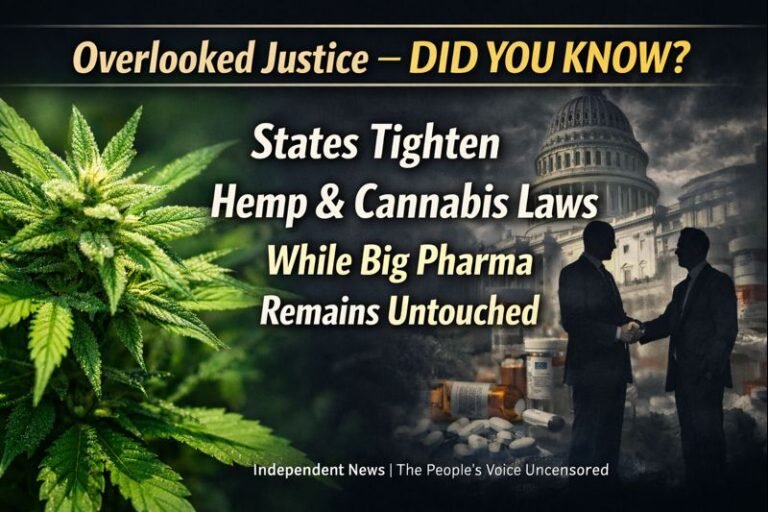
As of January 1, 2026, multiple U.S. states quietly enacted new hemp and cannabis laws that dramatically reshape access, pricing, and who is allowed to profit — all while powerful pharmaceutical and tobacco interests remain largely unaffected.
Across the country, lawmakers say these changes are about public safety and protecting children. But when you look closer, the structure of these laws tells a different story.
What Changed — and Why It Matters
New regulations now:





- Restrict hemp and cannabis sales to licensed, in-person retailers only
- Ban or limit online sales and delivery, cutting off rural, elderly, and disabled consumers
- Force hemp products into ultra-refined, THC-free isolates, stripping away naturally occurring compounds
- Add new excise taxes that drive up consumer prices
- Create compliance barriers that push small farmers and independent businesses out
These rules don’t reduce demand — they redefine who controls supply.
The Overlooked Contradiction
Hemp is a plant.
It has been used for centuries.
Its benefits are widely documented.
It has received overwhelming public support, including from veterans, law enforcement, patients, and members of the medical community.
Watch “Cannabis – The People’s Vote vs The Rules of Law” 6Mins
- Tobacco, which causes millions of deaths worldwide
- Alcohol, a leading factor in violence and addiction
- Pharmaceutical drugs tied to the opioid crisis
Did you know?
When lawmakers restrict access to natural alternatives while protecting corporate industries, regulation becomes less about safety — and more about profit and control.
Who Pays the Price
These policies don’t affect lawmakers or lobbyists.
They affect:
- People seeking non-opioid pain relief
- Veterans managing PTSD
- Families priced out of wellness alternatives
- Small businesses built legally under previous laws
When access is limited and prices rise, lawmakers are no longer neutral regulators — they are decision-makers over who can afford relief and who cannot.
The Bigger Question
If hemp is legal…
If voters supported access…
If benefits are documented…
Why are lawmakers still tightening control?
And why does transparency stop when it threatens powerful interests?
Overlooked Justice Takeaway
This is not just about hemp or cannabis.
This is about government overreach, corporate protection, and a system that claims to serve the people while quietly serving itself.
Without:
- Term limits
- Strong anti-corruption laws
- True transparency
We risk crossing a point where nature is regulated out of reach, and only those who profit from sickness are left untouched.