
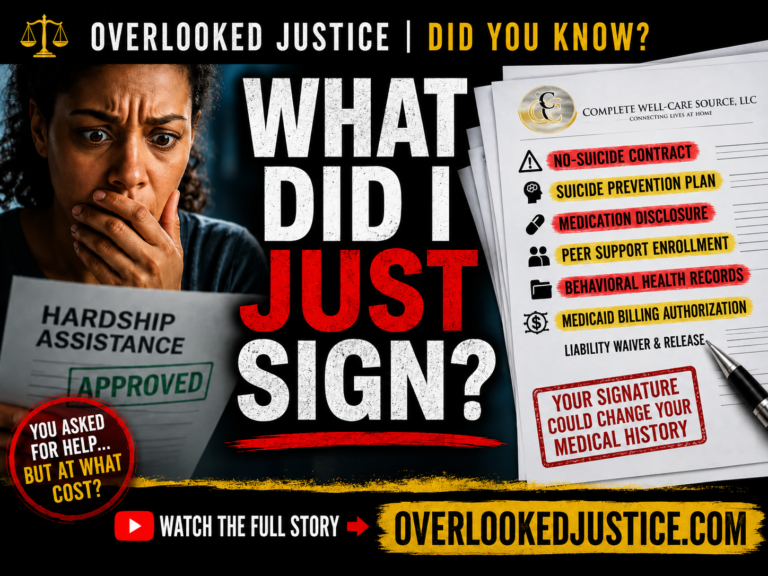
Some links on this page may be promotional or referral-based. Overlooked Justice may earn compensation from qualifying actions at no additional cost to you. Offers and availability are subject to third-party terms. Editorial integrity remains independent.
Many Americans turn to agencies, nonprofits, case managers, or support organizations during difficult times—for help with:
✔ Rent assistance
✔ Utility shutoff prevention
✔ Food insecurity
✔ Emergency transportation
✔ Medical hardship bills
✔ Crisis grants
✔ Temporary financial assistance
But here’s what many consumers are never told…





Did You Know?
In some cases, the paperwork presented after receiving hardship assistance may include documents tied to services you never asked for.
That paperwork may include:
⚠ Behavioral health intake forms
⚠ Crisis intervention plans
⚠ Suicide prevention contracts
⚠ Peer support enrollment
⚠ Medication disclosure forms
⚠ Treatment acknowledgments
⚠ Medicaid-funded service planning
⚠ Liability waivers and transportation releases
In documents reviewed by Overlooked Justice, the packet included:
• A “No-Suicide Contract”
• Suicide Prevention & Safety Planning
• Medication Disclosure Sheets
• Peer Support Service Planning
• Medicaid-aligned Person-Centered Planning
• Provider Choice Forms
• Waivers confirming no duplicate services elsewhere
• Broad transportation liability releases
These documents appear throughout the reviewed packet.
Why This Matters
If you sign documents you don’t fully understand, you may unknowingly consent to:
1. Behavioral Health Record Creation
Your information could potentially be entered into:
• Electronic Health Records (EHRs)
• Medicaid care systems
• Behavioral health provider networks
• Treatment databases
• Case management systems
That may create a service history that did not previously exist.
2. Insurance or Medicaid Billing
Some forms may authorize agencies to provide and document services that could be billable under:
• Medicaid
• Managed care networks
• Community support programs
• Behavioral health services
3. Medical or Service History Changes
Even if you originally sought help for:
• Utility assistance
• Housing hardship
• Transportation support
• Emergency financial aid
Signing unrelated forms may later create documentation involving:
• Crisis intervention
• Mental health support
• Medication compliance
• Wellness recovery planning
• Peer support services
That history may not reflect why you originally sought help.
What Consumers Should Ask Before Signing
Before signing hardship assistance paperwork, ask:
✅ What exact service am I being enrolled in?
✅ Is Medicaid or insurance being billed under my name?
✅ Will this create a behavioral health record?
✅ Why am I being asked to sign suicide or crisis forms?
✅ Can I receive hardship assistance without additional service enrollment?
✅ Can I review all handbooks and disclosures first?
✅ Has anything already been entered under my identity?
Know Your Rights
You have the right to:
✔ Ask questions before signing
✔ Request all handbooks and disclosures
✔ Request copies of every document
✔ Decline services you did not request
✔ Request billing records
✔ Request your intake file
✔ Protect the accuracy of your personal and medical history
Hardship should never mean surrendering informed consent.
Consumers deserve transparency.
⚠ Consumer Awareness Notice:
This piece is educational and not legal advice, but it raises real consumer awareness issues—especially when assistance paperwork includes crisis, treatment, or behavioral-health forms unrelated to the original request.
⚖️ Overlooked Justice – The Voice of the People, Uncensored